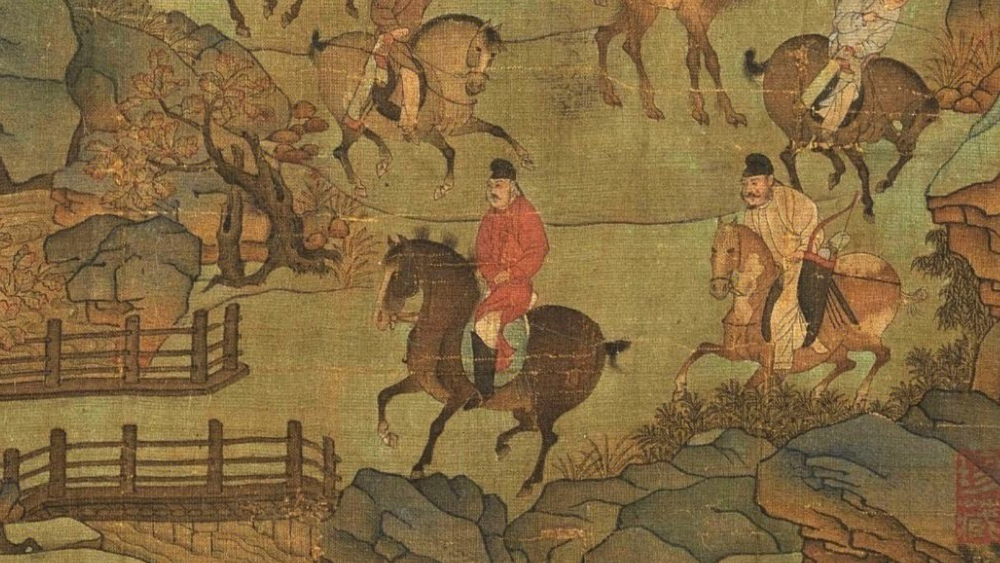
Emperor Minghuang's Journey to Shu
Introduction
Emperor Minghuang's Journey to Shu or Minghuang Xing Shu Tu(明皇幸蜀图) in Chinese, is a renowned Chinese landscape painting created by the artist Li Zhaodao during the Tang Dynasty. There is another theory that the painting was created by Li Zhaodao's father, Li Sixun.
This masterpiece captures the legendary journey of Emperor Xuanzong of Tang, also known as Emperor Minghuang, as he traveled from the capital Chang'an to the southwestern region of Shu, present-day Sichuan province, during a tumultuous period in Chinese history. The painting is celebrated for its intricate details and vivid representation of the mountainous landscapes that characterize the region. It is a significant work that not only showcases the artistic prowess of the Tang Dynasty but also reflects the cultural and historical context of the time.
Historical Background
The Tang Dynasty, often considered a golden age in Chinese history, was marked by prosperity, cultural flourishing, and territorial expansion. Emperor Xuanzong, reigning from 712 to 756, was one of the most celebrated rulers of this era. However, his reign was also marred by the An Lushan Rebellion, a devastating revolt that forced the emperor to flee the capital. This historical event serves as the backdrop for Emperor Minghuang's Journey to Shu. The painting's narrative is rooted in the emperor's forced retreat, highlighting a period of political instability and upheaval. During his journey, Xuanzong sought refuge in the Sichuan region, which was known for its strategic importance and natural beauty. The painting immortalizes this journey, capturing the emperor's resilience and the stunning landscapes of the region.
Journey Narrative
Departure from Chang'an
The journey begins with Emperor Minghuang's departure from Chang'an, the capital of the Tang Dynasty, which was one of the largest and most cosmopolitan cities of its time. The city was a hub of cultural exchange and economic activity, representing the height of Chinese civilization. However, political turmoil necessitated the emperor's retreat. The painting captures the initial stages of the journey, depicting the emperor and his entourage as they leave the bustling capital behind. The scene is filled with a sense of urgency and determination, as the imperial procession sets out amidst the backdrop of the city's grandeur.
Travel through Sichuan
As the journey progresses, the painting illustrates the diverse and rugged landscapes of Sichuan. The region is renowned for its dramatic mountain ranges, deep gorges, and lush valleys. The emperor's journey through these landscapes is depicted with great attention to detail, capturing the challenges and awe-inspiring sights encountered along the way. This section of the painting reflects the harmony between man and nature, a theme prevalent in Chinese landscape art.
Arrival in Shu
The narrative culminates with the arrival of Emperor Minghuang in Shu, marking the end of his arduous journey. The painting captures the moment of respite and reflection as the emperor reaches his destination. The peaceful and serene depiction of Shu contrasts with the earlier tumultuous scenes, symbolizing the restoration of order and stability. The artistic representation of Shu is characterized by tranquil rivers and lush hills, creating a sense of calm and renewal. This final scene underscores the resilience and adaptability of the emperor, as well as the enduring beauty of the Chinese landscape.
Cultural Significance
Emperor Minghuang's Journey to Shu holds immense cultural significance as it encapsulates the historical and artistic achievements of the Tang Dynasty. The painting serves as a visual narrative of a pivotal moment in Chinese history, reflecting the themes of exile, resilience, and the relationship between humans and nature. It exemplifies the traditional Chinese landscape painting style, which emphasizes the harmonious coexistence of man and the natural world. Furthermore, the painting is a testament to the artistic innovation of the Tang period, showcasing the advanced techniques and aesthetic sensibilities that have influenced generations of artists.
Influence on Literature
The journey of Emperor Minghuang has inspired numerous literary works throughout Chinese history, cementing its place in both artistic and literary traditions. The painting has been referenced in poems, prose, and plays, often symbolizing themes of exile, perseverance, and renewal. The story of Emperor Minghuang's journey serves as an allegory for overcoming adversity and finding harmony in the face of chaos. This narrative has resonated with writers and poets, who have drawn upon it to explore broader themes of human experience and resilience. The enduring influence of the painting on literature highlights its cultural and historical significance, as well as its impact on the broader Chinese artistic tradition.








